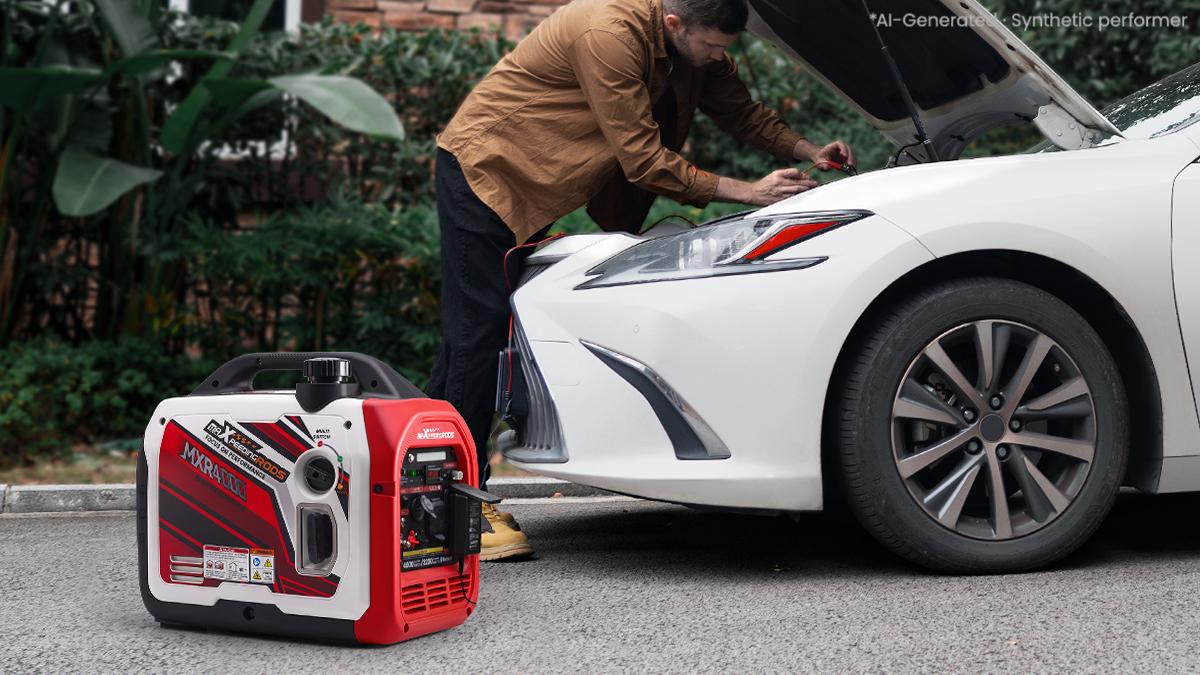
Choosing a portable generator is not simply a matter of selecting the model with the highest number on the label. A generator that is too small may struggle when a refrigerator, air conditioner or power tool starts. One that is much larger than your actual needs may add unnecessary cost and take up more storage space.
The right choice begins with understanding what you plan to power and which devices will operate at the same time.
Start With Running Watts and Starting Watts
Running watts describe the power a device needs during normal operation. Starting watts refer to the short burst of additional power required when equipment with an electric motor first switches on.
Lights, laptops and televisions generally do not create a large starting load. Refrigerators, pumps, air conditioners and many power tools can require more power at startup.
To estimate your requirement, add the running watts of everything you expect to use at the same time. Then account for the largest additional starting load in that group. Check each device label or owner’s manual rather than relying on a generic estimate, since power requirements vary by model.
For more background, see our guide to how inverter generators work.
Leave Room Above Your Calculation
Avoid choosing a generator whose rated output exactly matches your calculated load. Some additional capacity allows it to manage startup demand and normal changes in power use without operating continuously at its limit.
This does not mean buying the largest generator available. Instead, calculate your actual load first and then select the next suitable output level.
Match the Generator to the Job
For light camping, charging electronics and operating a limited number of small appliances, the MaXpeedingRods 2350W portable inverter generator provides 1,800 running watts. Its suitcase-style design and 33 lb net weight make it a practical option when portability matters.
Users who want to support several everyday loads or an RV setup may need more capacity. The 3800W portable inverter generator provides 3,200 running watts and includes a 120V 30A outlet. Whether it can operate a particular RV air conditioner depends on the air conditioner’s startup requirement and any other equipment connected at the same time.
For additional output and a choice of fuels, the 5000W dual-fuel inverter generator operates on gasoline or LPG. It provides 4,000 running watts on gasoline and 3,600 running watts on LPG. Always calculate the available capacity according to the fuel you intend to use.
For a planned group of essential appliances, larger RV loads or higher-demand garage equipment, the 6000W inverter generator provides 5,000 running watts with 120V and 240V output. Its app-based monitoring can display information such as load power, fuel level and runtime. Our separate 6000W inverter generator review provides a closer look at the model.
Check More Than Wattage
Before ordering, confirm the fuel type, voltage, outlet configuration, weight and expected runtime at a stated load. A generator may provide enough total wattage but still lack the outlet or voltage required by a particular appliance.
Portable generators must also be operated outdoors in a well-ventilated location, away from doors, windows and other openings. Never connect a generator to household wiring through a wall outlet. Any connection to a residential electrical system requires compliant equipment and installation by a licensed electrician according to local requirements.
For more operating guidance, read our essential generator safety tips.
Once you know your running load, startup demand and required connections, you can compare the available MaXpeedingRods inverter generators and choose the size that fits how you will actually use it.



Guten Tag, ich habe am 11.3.2026 einen Maxpeedinrods Inverter Generator MXR3500S gekauft. Die Lithium Ion Batterie Model Specifikation: BQH2000 12,8V/1.6Ah ist defekt.
Ich benötige dringend eine neue Batterie.
Mit freundlichen Grüßen
Manfred Meier
Hi, for product issues, I recommend reaching out to our after-sales support team. They’ll be able to assist you with your issue.
Email: SupportUS@Maxpeedingrods.com
hotline:(1)213-459-3517