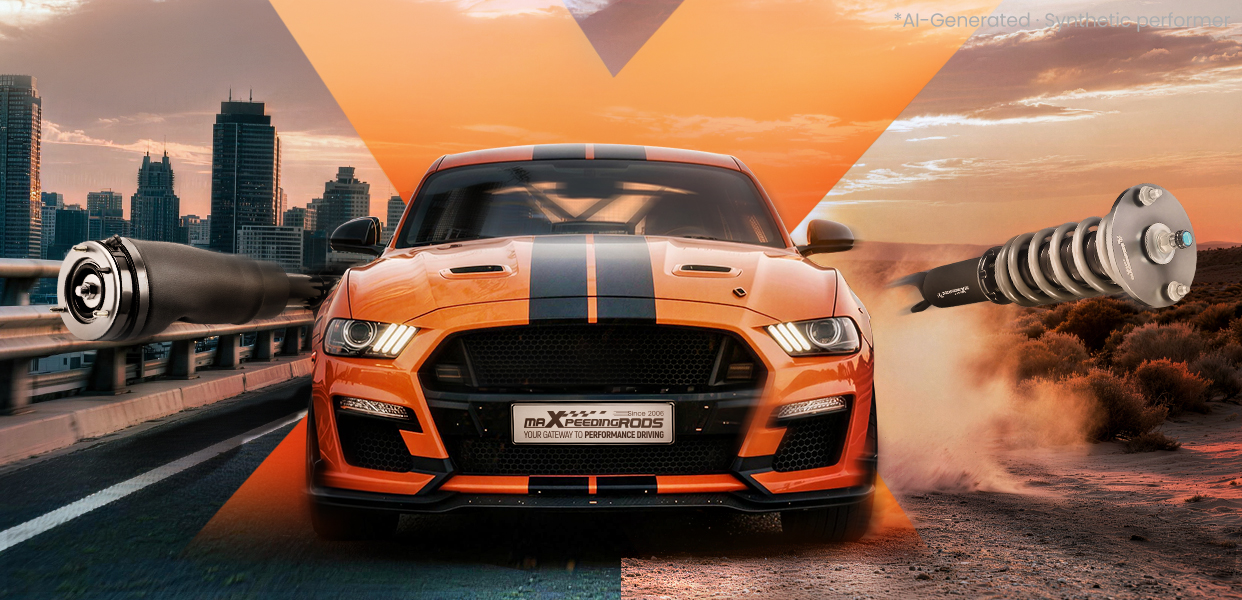
If you want to change how your car sits, rides, or responds, air suspension and coilovers are two options you will often come across. Both can influence ride height and suspension behavior, but they achieve those results in very different ways.
One uses pressurized air to support the vehicle. The other relies on matched coil springs and dampers with mechanical adjustment. The better choice depends less on which system sounds more advanced and more on what your vehicle already has, how you drive, and what you want to change.
Same Job, Different Hardware
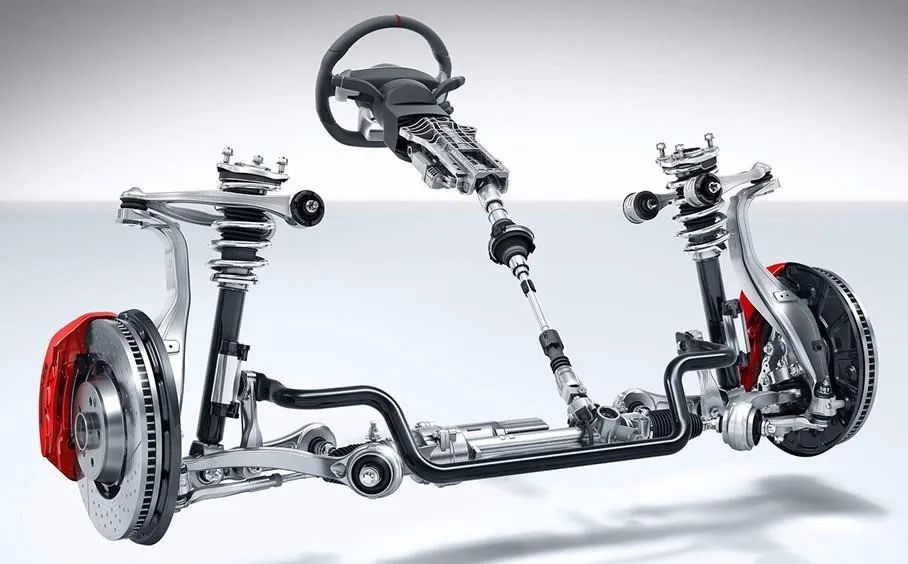
Every suspension system has to support the vehicle and control how it moves over the road. The spring carries the vehicle’s weight and absorbs changes in road input, while the damper controls how quickly the suspension compresses and rebounds.
Air suspension and coilovers both handle these basic jobs. The difference lies in the spring medium, the adjustment method, and the additional parts required to make the system work.
Air Suspension: Adapting to Height and Load
An air suspension system uses air springs or air struts filled with pressurized air. Depending on the vehicle, it may also rely on a compressor, air lines, a valve block, height sensors, and an electronic control unit.
Adding or releasing air changes the support provided by the air springs. On compatible systems, this can help the vehicle maintain a set ride height or respond to changing loads. Some factory-equipped vehicles also offer selectable height or damping settings.
However, replacing an air spring or air strut does not add functions the vehicle did not originally support. A replacement part works with the existing air suspension system, so the vehicle’s original configuration matters when selecting components.
Coilovers: More Direct Suspension Adjustment
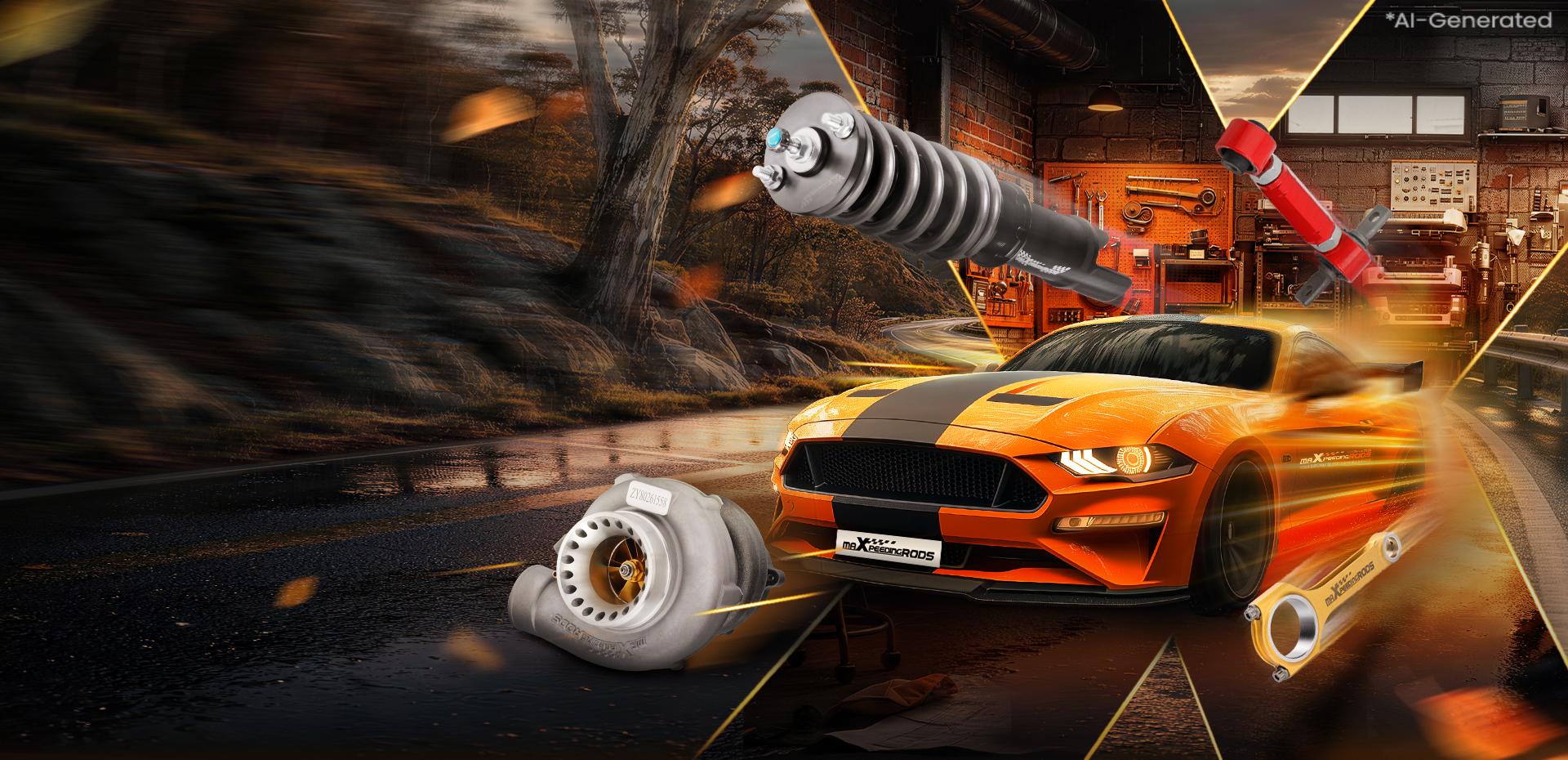
A coilover pairs a coil spring with a matched damper. Threaded components allow the ride height to be adjusted mechanically, making coilovers a common choice for drivers who want a lower stance and more control over how the car responds.
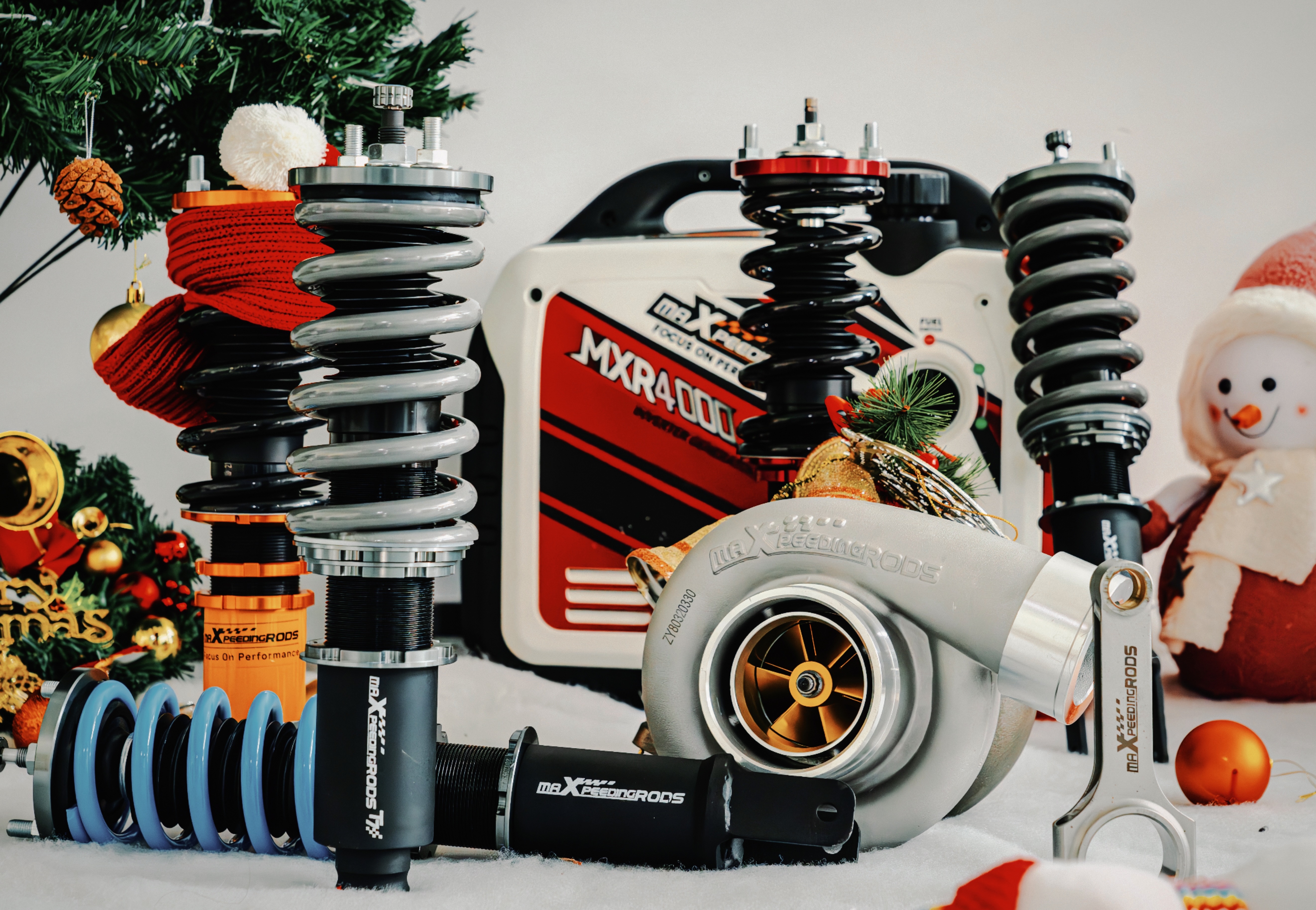
Depending on the series and vehicle application, MaXpeedingrods coilovers may offer full-length ride-height adjustment, preset damping, or 24-click rebound adjustment. Selected applications also include adjustable camber plates to support wheel alignment and suspension setup.
The height is set directly at the suspension rather than changed through air pressure. After a significant ride-height adjustment, the suspension geometry and wheel alignment should also be checked.
How They Differ on the Road
Air suspension is often chosen for its ability to manage ride height, adapt to changing loads, and retain the comfort-focused characteristics of a factory air suspension system. Because it depends on connected pneumatic and electronic parts, maintenance may involve checking air lines, seals, compressors, sensors, and valves.
Coilovers take a more mechanical approach. They are commonly used to reduce body movement, sharpen suspension response, and create a lower stance for street or performance-oriented builds. More aggressive settings can provide firmer support, but they may also make rough roads and daily driving feel less compliant.
Neither system is automatically more comfortable or better handling. The result depends on the spring and damping setup, vehicle design, installation, road conditions, and driver preference.
Choose Based on What You Want to Change
Air suspension is the more relevant direction when restoring a factory-equipped system or maintaining its ride-height and load-management functions. Coilovers are better suited to builds focused on lowering, mechanical adjustability, and more direct control over suspension response.
Before ordering, check the vehicle year, model, drivetrain, mounting position, and original suspension configuration. A suspension upgrade works best when it matches both the vehicle and the way it is actually driven.