Editor’s Note: This article is based on a YouTube video published by automotive creator Paykin, documenting his transformation of a 2010 Hyundai Getz into a turbocharged hatchback. Originally powered by a naturally aspirated 1.6L G4ED engine producing approximately 100 horsepower, the Getz became the subject of a custom build featuring a maXpeedingrods GT660 turbocharger, front-mount intercooler kit and 38mm external wastegate. The video follows the installation challenges, Paykin’s firsthand impressions and the car’s first test drive.
Choosing the GT660 Turbocharger
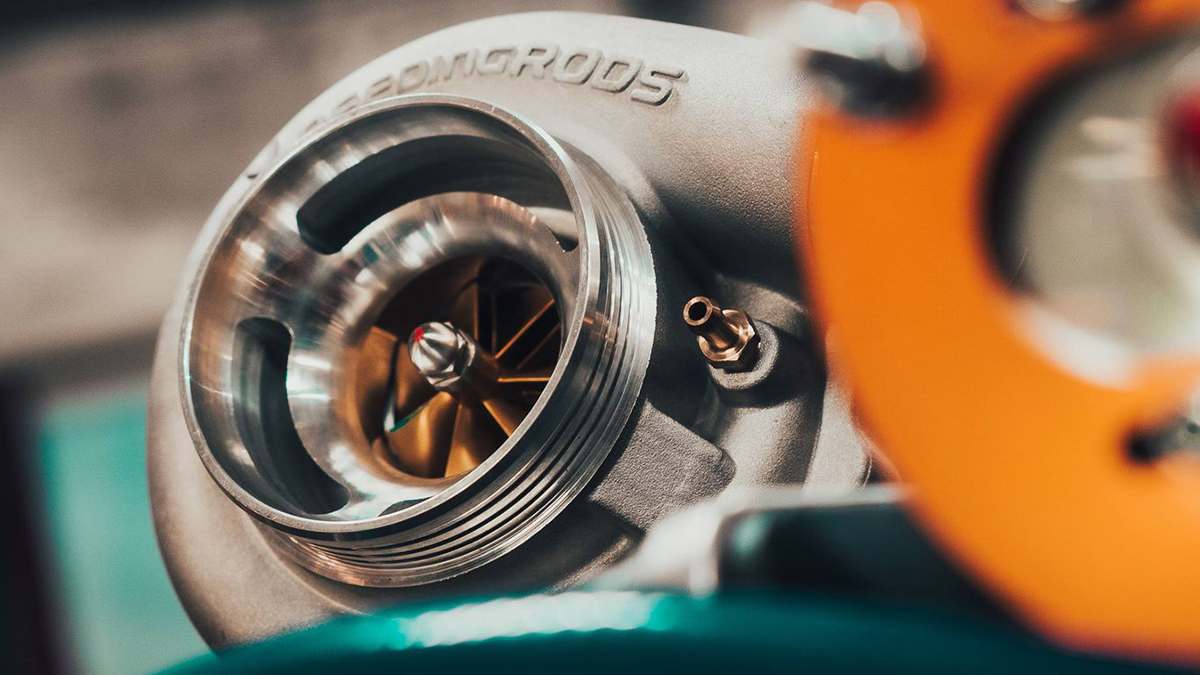
The centrepiece of the build is the maXpeedingrods GT660 Turbocharger.
Although the 1.6L Getz has a relatively small engine, the creator deliberately chose a sizeable turbocharger to achieve the distinctive power delivery he wanted from the front-wheel-drive hatchback.
The GT660 features a CNC-machined billet aluminium compressor wheel, dual ceramic ball bearings and a water-and-oil-cooled centre housing. These were among the details that caught the creator’s attention during the initial inspection.
He also commented positively on the turbocharger’s finish, saying, “the castings are so much nicer than they were before.”
Installing the GT660, however, required considerable fabrication. With very little clearance between the turbocharger, alternator and surrounding components, the team modified the exhaust manifold using angled pipe sections and a welded V-band connection to reposition the turbo.
The creator later switched to a different turbine housing configuration to gain additional clearance. This allowed the installation to progress while accommodating the Getz’s compact engine bay.
Fitting the Front-Mount Intercooler and Piping
The next major component was the maXpeedingrods Front-Mount Intercooler and 2.5-inch Piping Kit.
The kit features a tube-and-fin intercooler core designed to help manage compressed intake-air temperatures, along with 6061 aluminium piping, silicone couplers and clamps for custom charge-air routing.
Fitting the intercooler behind the Getz’s front bumper was not straightforward. The end tanks interfered with the original grille, requiring modifications to the bumper and the fabrication of mounting supports.
The piping installation presented a more encouraging result.
On the cold side, the creator was particularly pleased with how the supplied pipes fitted, explaining:
“Every single pipe I got from Max Speeding Rods went on perfectly on the cold side.”
He added, “Didn’t have to modify any piping or weld anything.”
The hot side required more fabrication due to the limited space around the alternator, radiator and radiator support. Nevertheless, the cold-side installation provided a practical example of how the universal piping components could be incorporated into a custom setup without additional pipe modifications in this particular build.
Integrating the 38mm External Wastegate
The build also featured a maXpeedingrods 38mm V-Band External Wastegate.
Designed to regulate exhaust gas bypass flow as part of a turbocharged engine’s boost-control system, the wastegate features a CNC-machined aluminium body and V-band connection.
For the Getz, the creator opted for an external wastegate arrangement rather than retaining the turbocharger’s original internal wastegate setup.
Positioning the component required custom fabrication around the tightly packed exhaust system. Working with a fellow fabricator, the creator developed a mounting arrangement and incorporated a separate screamer pipe into the build.
Particular attention was given to the wastegate’s exhaust entry, where the connecting section was machined and shaped to provide a smoother flow path.
Although the installation was completed, the creator noted during the first test drive that the wastegate had not yet opened as expected. He suspected the spring configuration might be a factor, leaving further inspection and adjustment for the next stage of the project.
First Start and Driving Impressions
After approximately two months of fabrication, wiring and engine management adjustments, the turbocharged Getz finally started and completed its first drive.
The creator had integrated a Haltech Elite 750 engine management setup, modified the ignition system and fabricated a custom exhaust to support the conversion.
During the test drive, the turbocharger successfully built boost, prompting an enthusiastic reaction: “That spool is crazy.”
He later summed up the initial result: “The car runs, it spools up, but that’s about it. Everything else needs a lot of work.”
The first drive also revealed areas requiring further attention, including crankcase pressure, wastegate operation and exhaust routing. Fuel-system upgrades and additional tuning were planned for a later stage.
While the project was not yet fully refined, it had achieved an important milestone: transforming a previously naturally aspirated Hyundai Getz into a running, driving turbocharged project car.
Note: This video documents an individual custom modification project. Product compatibility, installation requirements and results vary by vehicle and setup. Professional installation and tuning are recommended, and all modifications must comply with applicable local regulations. Vehicle and third-party brand names are used for identification only and do not imply affiliation or endorsement.